
I’ve been thinking a lot lately about how people actually consume content today—not how we measure it, not how we hope they use it, but how it really fits into their daily lives. And the more I pay attention to it, the more obvious it becomes that most content consumption today isn’t active at all. It’s passive.
People aren’t sitting down and deciding, “I’m going to listen to something now.” Content just follows them throughout the day. It’s in the car, in the background at work, playing through earbuds while they’re doing something else entirely. Podcasts, YouTube, streaming audio—it’s all filling the gaps in between everything else going on in their lives.
That’s not a shift away from audio. If anything, it’s the opposite. Audio has become more embedded into everyday life than ever before. But the way people access it—and the expectations around it—have changed.
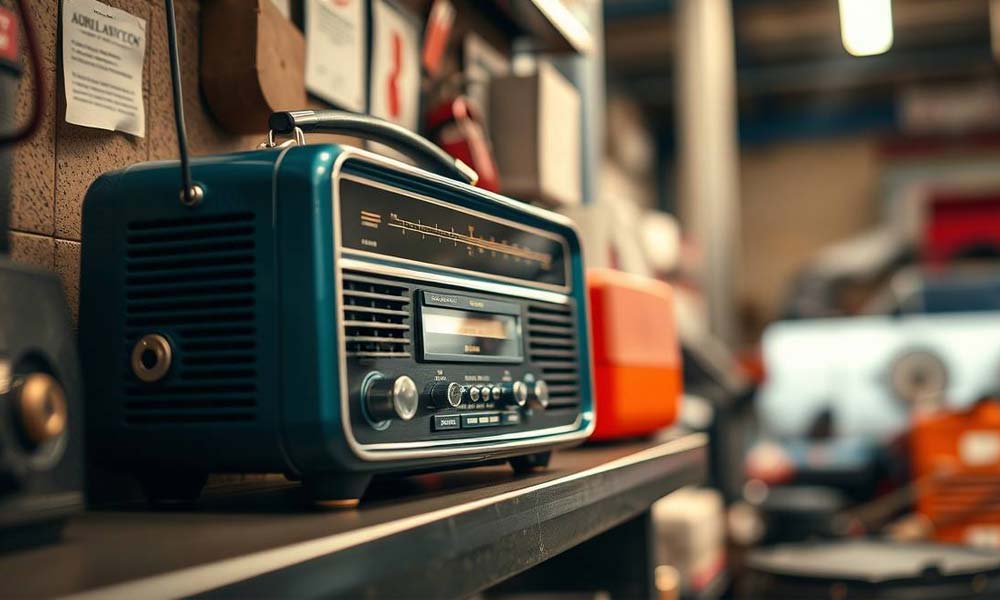
What’s interesting is that radio was built for this exact kind of behavior. Long before smartphones and apps, radio was the original passive medium. It was always there in the background, keeping people company while they worked, drove, or just went about their day. That hasn’t changed. What has changed is that radio is no longer the only option filling those moments.
I was watching the above recent episode of This Week in Radio Tech, where radio consultant Mike McVay was talking about podcasting. Now, I’ve written and talked about podcasts before, so none of that was new territory. But he made a point that really stuck with me—not because it was complicated, but because it was so simple.
That’s really what this comes down to. Not formats, not platforms, not even podcasts specifically. It’s about time. Every moment your audience has available to listen to something, whether they’re driving, working, or just killing time, is going to be filled by someone. The only question is whether your station is part of that equation.
Podcasting just happens to be one of the most obvious ways to extend your presence into those moments, but it’s really just one piece of a much bigger picture. This isn’t about adding another thing to your plate for the sake of it. It’s about recognizing that your content already exists—you’re creating it every day on the air—and finding ways to let it live beyond the moment it airs.
Because the reality is, radio can’t cover every part of a listener’s day the way it used to. You might own the morning drive. You might have strong midday or afternoon numbers. But what about everything in between? What about the times when someone wants something on-demand, or when they’re outside your signal, or when they simply aren’t in the habit of turning on a radio at all?
Those gaps are where other platforms have stepped in, and they’ve done it very effectively.
What’s changed isn’t the desire for content. It’s the expectation that content should be available anytime, anywhere, and on any device. And when your website and apps are structured the right way, that kind of distribution doesn’t have to create more work. Content can flow from one place to everywhere else, making it easier to stay present without constantly reinventing the wheel .
At that point, it’s not about chasing trends. It’s about removing friction. Making it easy for someone to listen when they want to, instead of only when you’re live.
Another shift that’s easy to overlook is who you’re actually competing with now. It’s not just the station across town anymore. It’s everything on a listener’s phone. Spotify, YouTube, podcasts, audiobooks—every one of them is competing for the same finite resource, which is time. And they’re all very good at filling it.
That doesn’t mean radio is at a disadvantage. In fact, in many ways, it still has the upper hand. You have personalities. You have local connection. You have content being created in real time, every single day. Most digital platforms would love to have that kind of raw material.
But if that content only exists in the moment it airs, its value is limited to that moment.
The opportunity now is to extend that value. To create more touch points throughout the day, even for people who may never “tune in” in the traditional sense. That might mean offering a podcast version of your morning show, breaking out strong segments into on-demand clips, or simply making your stream easier to access wherever your audience already is.
None of that replaces radio. It reinforces it.
We live in a time where content is increasingly passive. Success is no longer just about being live or being first. It’s about being available. Being there when your audience wants something to listen to, even if that moment doesn’t line up with your broadcast schedule.
That’s the shift. And it’s one radio is uniquely positioned to take advantage of—if it’s willing to think beyond the moment the mic goes off.
We want to help your radio station grow and succeed online. That journey starts with an amazing website that keeps visitors coming back often. Reach out to us to start your path to online success, or schedule an appointment to see our tools in action.