
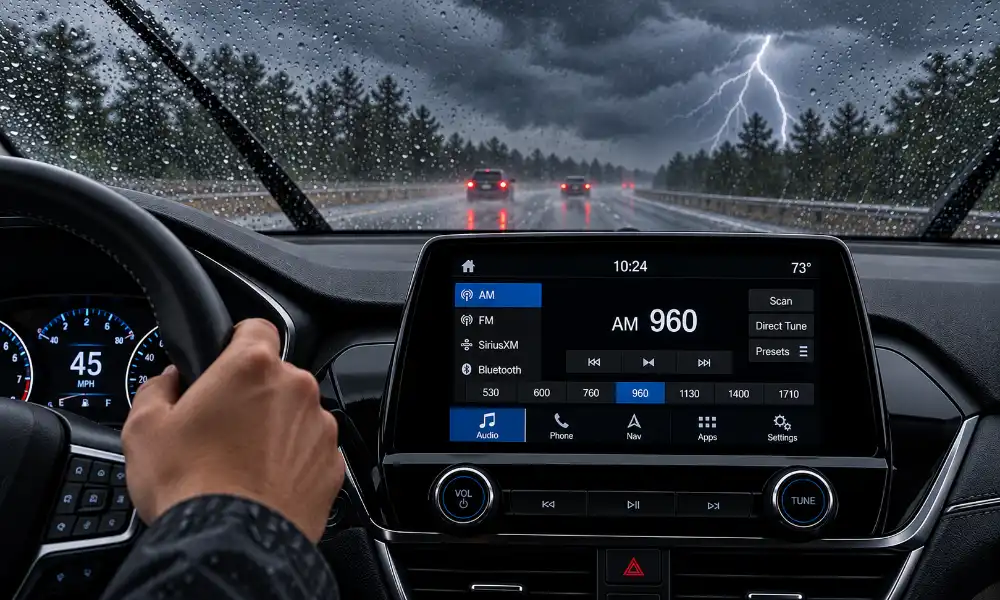
There has been a lot of attention given to protecting AM radio’s place in the automobile, and understandably so. For many AM stations, the car is still one of the most important places listeners find them. AM also continues to serve an important role during severe weather, emergencies and other situations when local information matters.
But there’s another part of this conversation that I think radio needs to have.
Keeping AM available in the dashboard doesn’t automatically protect the future of an AM station.
For years, I’ve noticed that AM stations often don’t receive the same digital attention as their FM counterparts. That’s certainly not true everywhere, but it’s common enough to be noticeable. The FM gets the better website presence, the stronger branding, the mobile app, the social promotion and sometimes even the better stream. The AM station gets a page on the company website with a logo, a schedule and a Listen Live button.
That’s a problem because the audience no longer experiences a radio station through one receiver.
Someone may discover an AM station while driving to work and later search for the story they heard that morning. They may want to hear an interview again, check the school closing that was mentioned, find the score from last night’s game or send a local story to somebody else. Maybe they want to listen at work where there isn’t an AM radio anywhere in the building.
That’s where the station’s digital presence becomes part of the station rather than something separate from it.
And AM stations may actually have some of the best material for this.
Think about what many successful local AM stations already do every day. They cover city and county government. They interview local officials. They talk about high school sports. They carry severe-weather information. They discuss road closures, elections, agriculture and community issues. They have local personalities who have lived in the market for decades and know practically everybody.
That’s valuable local content. Yet too much of it is still treated as disposable. It airs once and disappears.
If the morning show spends ten minutes talking with the mayor about a water problem, that shouldn’t exist only for the people who happened to be listening at 8:15 that morning. Put the important information on the website. Include the interview. Update the story when something changes. Now that piece of radio programming can be found in a Google search, shared on Facebook, included in a newsletter and discovered by someone who never heard the original broadcast.
That’s not taking something away from radio. It’s getting more mileage out of the work the station is already doing.
The same thing applies to high school sports. If your AM station is the local authority on Friday night football, your website should look like it. Scores, schedules, interviews, photos, previews and recaps shouldn’t live only on the air. If you’re known for local news, someone visiting your website should immediately understand that. If weather is an important part of what you do, the website and mobile experience should reflect that too.
This becomes especially important during severe weather and emergencies. AM radio has a tremendous advantage when people are in their vehicles and need information immediately. But five minutes later, that same person may want to pull out a phone and find the latest information. They may want to send it to their spouse, check whether a road is still closed or see whether school has been canceled.
The broadcast and the website aren’t competing with each other. They’re doing different parts of the same job.
Streaming is obviously part of this as well. If someone wants to listen to your AM station on a phone, computer, smart speaker or connected dashboard, the stream needs to work and it needs to sound good. A broken player or unreliable stream isn’t just a technical problem anymore. To that listener, the radio station isn’t working.
But I don’t think streaming alone qualifies as having a digital strategy.
Your website, stream, mobile presence, podcasts, email newsletter, social media and even how your content appears in search and AI results are all becoming different doors into the same radio station. The AM transmitter is one of those doors, and an extremely important one. It just isn’t the only one anymore.
There’s a business opportunity here too.
An AM station covering a local event can offer an advertiser much more than mentions during a remote broadcast. The station can create an event page, publish photos afterward, post interviews, include the sponsor in a newsletter and give that advertiser a presence that remains available after the remote van pulls away.
That’s additional value built from work the station was already doing.
This is why I hope the discussion about keeping AM in vehicles doesn’t become a reason for broadcasters to relax. Preserving access to AM on the dashboard is important, but access isn’t the same thing as relevance.
If anything, protecting AM’s place in the dashboard should give broadcasters more reason to invest in what happens after someone discovers the station there.
Get them from the radio to the website. Give them something useful when they arrive. Make your local content searchable. Make it shareable. Make the stream dependable. Give listeners reasons to subscribe to something, download something or come back tomorrow.
FM stations learned years ago that their brand had to exist beyond the frequency. AM stations need to think the same way.
Keeping AM in the car can protect an important doorway into the station. What happens after the listener walks through it is still up to us.
We want to help your radio station grow and succeed online. That journey starts with an amazing website that keeps visitors coming back often. Reach out to us to start your path to online success, or schedule an appointment to see our tools in action.